Buy wmqv.com ?
We are moving the project
wmqv.com .
Are you interested in purchasing the domain
wmqv.com ?
domain@kv-gmbh.de · 0541-91531010
Buy wmqv.com ?
When do you conjugate "avoir"?
The verb "avoir" is conjugated when talking about possession or to form compound tenses such as the passé composé. In these cases, "avoir" is conjugated according to the subject of the sentence. For example, "J'ai un chat" (I have a cat) or "Nous avons mangé" (We have eaten). **
How do you conjugate falloir?
The verb "falloir" is an impersonal verb, meaning it is only used in the third person singular. It is conjugated as "il faut" in the present tense, "il fallait" in the imperfect tense, and "il faudra" in the future tense. There is no need to conjugate it for different subjects, as it always remains in the third person singular form. **


Similar search terms for Conjugate Pair
Top-Angebote
Products related to Conjugate Pair:
-
Apple AirPods Max 2 Wireless Over-Ear Headphones Starlight – Active Noise Cancellation, Adaptive Audio, Live Translation & Personalised Spatial Audio.gadcet-pdp{--g-green:#00a651;color:#1f2430;line-height:1.55;font-size:inherit;max-width:760px}.gadcet-pdp>*:first-child{margin-top:0}.gadcet-pdp p{margin:0 0.9em}.gadcet-pdp h3{font-size:1.05em;font-weight:600;color:#11161f;margin:1.4em 0.5em;padding-left:.5em;border-left:3px solid var(--g-green);border-radius:0;line-height:1.3}.gadcet-pdp ul{list-style:none!important;margin:0 0.9em;padding:0!important}.gadcet-pdp ul li{position:relative;padding:.1em 0.1em 1.5em;margin:0}.gadcet-pdp ul li::before{content:"";position:absolute;left:.16em;top:.45em;width:.36em;height:.66em;border:solid var(--g-green);border-width:0.14em.14em 0;transform:rotate(45deg)}.gadcet-pdp table{width:100%;border-collapse:collapse;margin:.3em 0 1em;font-size:.95em;border:1px solid #e7e9ee!important;border-radius:8px;overflow:hidden}.gadcet-pdp table td{padding:.5em.8em;border-bottom:1px solid #eef0f4!important;vertical-align:top}.gadcet-pdp table tr:last-child td{border-bottom:0!important}.gadcet-pdp table tr:nth-child(even){background:#f7f9f8}.gadcet-pdp table td:first-child{font-weight:600;color:#454c59;width:40%}@media (max-width:600px){.gadcet-pdp table td:first-child{width:42%}} Experience immersive Apple audio with the AirPods Max 2 Wireless Over-Ear Headphones in Starlight — built for focused listening, clearer calls and seamless everyday use with Active Noise Cancellation, Adaptive Audio and Personalised Spatial Audio. Key Features Active Noise Cancellation helps reduce unwanted background noise for more focused listening. Adaptive Audio intelligently blends noise control and awareness as your surroundings change. Personalised Spatial Audio with dynamic head tracking creates a more immersive soundstage for supported content. Live Translation support for real-time conversations across selected languages when paired with a compatible Apple Intelligence-enabled iPhone. Apple H2 headphone chip in each ear cup for intelligent audio processing and smooth Apple device use. Bluetooth 5.3 wireless technology for cable-free listening. USB-C charging, plus USB-C wired listening for lossless audio and ultra-low latency with compatible content and apps. Up to 20 hours of listening time with Active Noise Cancellation enabled. A 5-minute charge provides around 1.5 hours of listening time. Nine microphones support noise control and voice pickup for calls, meetings and voice commands. Benefits Stay immersed on commutes, flights, study sessions and busy workdays. Enjoy films, music and supported content with a wider, more cinematic feel. Move smoothly between compatible Apple devices such as iPhone, iPad and Mac. Brand new, ready to enjoy straight from the box. Specifications Brand Apple Model AirPods Max 2 Colour Starlight Type Wireless over-ear headphones Audio Features Active Noise Cancellation, Adaptive Audio, Transparency mode, Personalised Spatial Audio Chip Apple H2 headphone chip in each ear cup Microphones Nine microphones total Connectivity Bluetooth 5.3 wireless technology...467,00 £*Shipping: 0,00 £Secure redirect to the provider
-
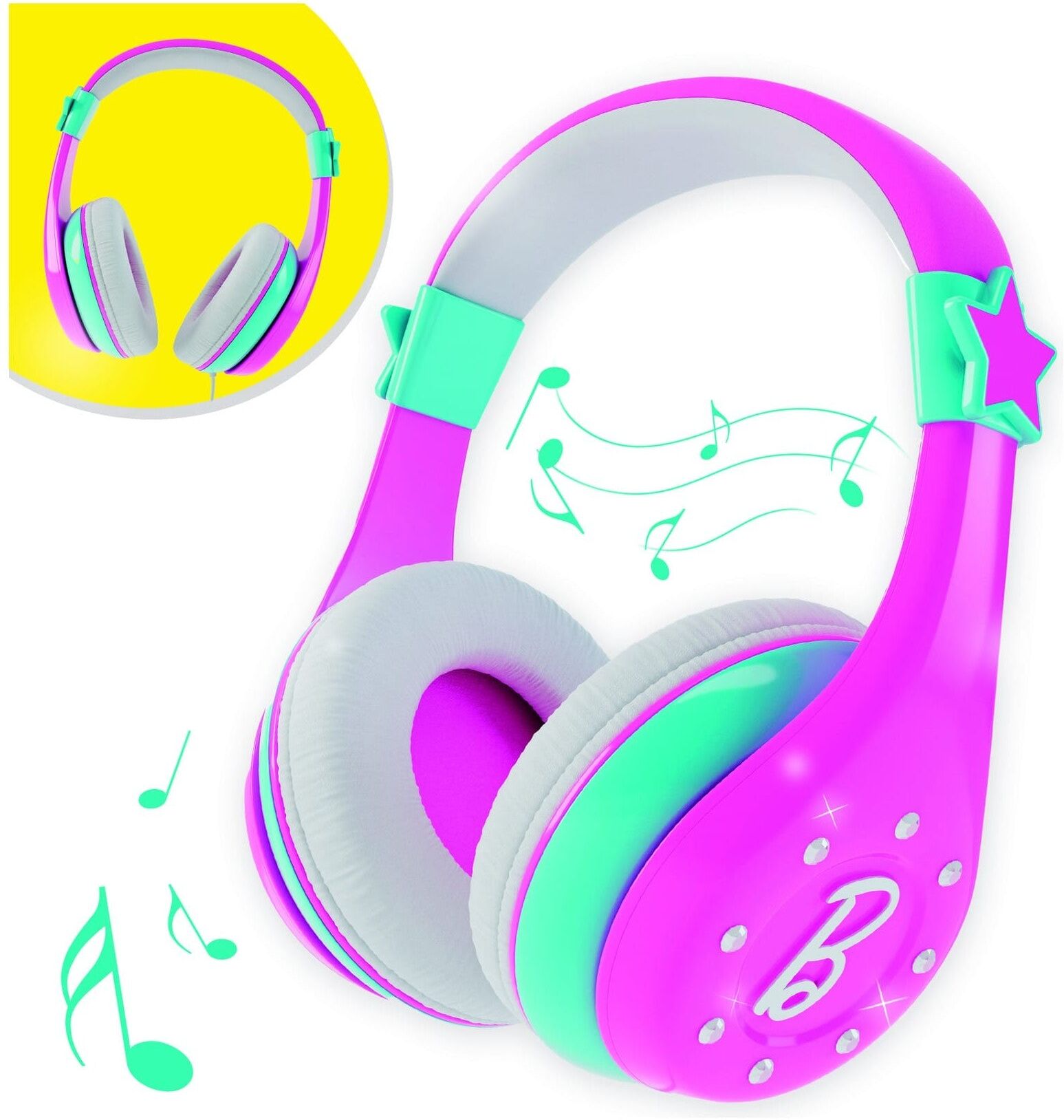
Lisciani Barbie Bluetooth Headphones for Kids, Kid-Friendly Wireless Audio, Ages Four and UpLisciani Barbie Bluetooth headphones bring kid-friendly wireless audio to playtime for children aged four and up. The Lisciani brand combines a trusted toy heritage with practical tech, delivering Bluetooth headphones designed for kids and easy for parents to trust. These headphones are designed for everyday adventures and feature a durable, lightweight construction that fuses Barbie-themed style with comfort. They're perfect for car rides, classroom activities, or quiet-time listening. The headphones pair with a smartphone or tablet in seconds and switch devices with ease. A safe volume limiter protects young hearing during hours of listening. The headphones have a lightweight, adjustable headband with soft, cushioned ear cups for all-day comfort. The Barbie-themed design is a familiar look that kids will love to wear. They're ideal for kids aged four and up.21,99 £*Shipping: 3,95 £Secure redirect to the provider
-
Uplift Essentials Universal Motorcycle Rearview Mirror Pair 8mm 10mm Moto & ATV Accessories whiteUpgrade your visibility and ride safety with this Universal Motorcycle Rearview Mirror Pair. Engineered for maximum compatibility, these mirrors are designed to fit a wide range of vehicles, including Suzuki, Yamaha, BMW, and various ATV or OffRoad...56,97 $*Shipping: 0,00 $Secure redirect to the provider



-
How do you conjugate French adjectives?
In French, adjectives must agree in gender (masculine or feminine) and number (singular or plural) with the noun they modify. To conjugate a French adjective, you need to add the appropriate ending to match the gender and number of the noun it describes. For example, to make the adjective "petit" (small) agree with a masculine singular noun, you would use "petit." But if the noun is feminine singular, you would use "petite." And for a masculine plural noun, you would use "petits," and for a feminine plural noun, you would use "petites." **
-
How do you conjugate in Hebrew?
In Hebrew, verbs are conjugated based on the subject of the sentence and the tense of the action. There are different conjugation patterns for each tense (past, present, future) and for each subject (I, you, he/she/it, we, you all, they). The verb root remains the same, but the conjugation changes to match the subject and tense. Additionally, Hebrew verbs also change based on gender and number of the subject. Learning the conjugation patterns and practicing with different verbs is essential for mastering Hebrew verb conjugation. **
-
Can you help me conjugate avoir?
Sure! The verb "avoir" is conjugated as follows: - J'ai (I have) - Tu as (You have) - Il/Elle/On a (He/She/One has) - Nous avons (We have) - Vous avez (You have) - Ils/Elles ont (They have) **
-
How do you conjugate in French?
In French, verbs are conjugated to match the subject of the sentence, including the person (I, you, he/she, we, they) and the tense (present, past, future, etc.). To conjugate a regular verb in the present tense, you remove the infinitive ending (-er, -ir, -re) and add the appropriate ending for the subject (je, tu, il/elle, nous, vous, ils/elles). For example, for the verb "parler" (to speak), you would conjugate it as "je parle" (I speak), "tu parles" (you speak), "il/elle parle" (he/she speaks), "nous parlons" (we speak), "vous parlez" (you speak), "ils/elles parlent" (they speak). Irregular verbs have their own unique conjugation patterns that need to be memorized. **

How do you conjugate "perire" in Latin?
The verb "perire" in Latin is conjugated as follows in the present tense: - I perish: pereo - You perish: peris - He/she/it perishes: perit - We perish: perimus - You (plural) perish: peritis - They perish: pereunt **
How do you conjugate the Passé Composé?
To conjugate the Passé Composé in French, you typically use the auxiliary verb "avoir" or "être" followed by the past participle of the main verb. The choice between "avoir" and "être" depends on the verb being used and whether it is a transitive or intransitive verb. The past participle of regular -er verbs is formed by replacing the -er ending with -é, for -ir verbs you replace the -ir ending with -i, and for -re verbs you replace the -re ending with -u. Irregular verbs have unique past participle forms that need to be memorized. **
Top-Angebote
Products related to Conjugate Pair:
-
Apple AirPods Max 2 Wireless Over-Ear Headphones Starlight – Active Noise Cancellation, Adaptive Audio, Live Translation & Personalised Spatial Audio.gadcet-pdp{--g-green:#00a651;color:#1f2430;line-height:1.55;font-size:inherit;max-width:760px}.gadcet-pdp>*:first-child{margin-top:0}.gadcet-pdp p{margin:0 0.9em}.gadcet-pdp h3{font-size:1.05em;font-weight:600;color:#11161f;margin:1.4em 0.5em;padding-left:.5em;border-left:3px solid var(--g-green);border-radius:0;line-height:1.3}.gadcet-pdp ul{list-style:none!important;margin:0 0.9em;padding:0!important}.gadcet-pdp ul li{position:relative;padding:.1em 0.1em 1.5em;margin:0}.gadcet-pdp ul li::before{content:"";position:absolute;left:.16em;top:.45em;width:.36em;height:.66em;border:solid var(--g-green);border-width:0.14em.14em 0;transform:rotate(45deg)}.gadcet-pdp table{width:100%;border-collapse:collapse;margin:.3em 0 1em;font-size:.95em;border:1px solid #e7e9ee!important;border-radius:8px;overflow:hidden}.gadcet-pdp table td{padding:.5em.8em;border-bottom:1px solid #eef0f4!important;vertical-align:top}.gadcet-pdp table tr:last-child td{border-bottom:0!important}.gadcet-pdp table tr:nth-child(even){background:#f7f9f8}.gadcet-pdp table td:first-child{font-weight:600;color:#454c59;width:40%}@media (max-width:600px){.gadcet-pdp table td:first-child{width:42%}} Experience immersive Apple audio with the AirPods Max 2 Wireless Over-Ear Headphones in Starlight — built for focused listening, clearer calls and seamless everyday use with Active Noise Cancellation, Adaptive Audio and Personalised Spatial Audio. Key Features Active Noise Cancellation helps reduce unwanted background noise for more focused listening. Adaptive Audio intelligently blends noise control and awareness as your surroundings change. Personalised Spatial Audio with dynamic head tracking creates a more immersive soundstage for supported content. Live Translation support for real-time conversations across selected languages when paired with a compatible Apple Intelligence-enabled iPhone. Apple H2 headphone chip in each ear cup for intelligent audio processing and smooth Apple device use. Bluetooth 5.3 wireless technology for cable-free listening. USB-C charging, plus USB-C wired listening for lossless audio and ultra-low latency with compatible content and apps. Up to 20 hours of listening time with Active Noise Cancellation enabled. A 5-minute charge provides around 1.5 hours of listening time. Nine microphones support noise control and voice pickup for calls, meetings and voice commands. Benefits Stay immersed on commutes, flights, study sessions and busy workdays. Enjoy films, music and supported content with a wider, more cinematic feel. Move smoothly between compatible Apple devices such as iPhone, iPad and Mac. Brand new, ready to enjoy straight from the box. Specifications Brand Apple Model AirPods Max 2 Colour Starlight Type Wireless over-ear headphones Audio Features Active Noise Cancellation, Adaptive Audio, Transparency mode, Personalised Spatial Audio Chip Apple H2 headphone chip in each ear cup Microphones Nine microphones total Connectivity Bluetooth 5.3 wireless technology...467,00 £*Shipping: 0,00 £Secure redirect to the provider
-
When do you conjugate "avoir"?
The verb "avoir" is conjugated when talking about possession or to form compound tenses such as the passé composé. In these cases, "avoir" is conjugated according to the subject of the sentence. For example, "J'ai un chat" (I have a cat) or "Nous avons mangé" (We have eaten). **
-
How do you conjugate falloir?
The verb "falloir" is an impersonal verb, meaning it is only used in the third person singular. It is conjugated as "il faut" in the present tense, "il fallait" in the imperfect tense, and "il faudra" in the future tense. There is no need to conjugate it for different subjects, as it always remains in the third person singular form. **
-
How do you conjugate French adjectives?
In French, adjectives must agree in gender (masculine or feminine) and number (singular or plural) with the noun they modify. To conjugate a French adjective, you need to add the appropriate ending to match the gender and number of the noun it describes. For example, to make the adjective "petit" (small) agree with a masculine singular noun, you would use "petit." But if the noun is feminine singular, you would use "petite." And for a masculine plural noun, you would use "petits," and for a feminine plural noun, you would use "petites." **
-
How do you conjugate in Hebrew?
In Hebrew, verbs are conjugated based on the subject of the sentence and the tense of the action. There are different conjugation patterns for each tense (past, present, future) and for each subject (I, you, he/she/it, we, you all, they). The verb root remains the same, but the conjugation changes to match the subject and tense. Additionally, Hebrew verbs also change based on gender and number of the subject. Learning the conjugation patterns and practicing with different verbs is essential for mastering Hebrew verb conjugation. **
Similar search terms for Conjugate Pair
-
Lisciani Barbie Bluetooth Headphones for Kids, Kid-Friendly Wireless Audio, Ages Four and UpLisciani Barbie Bluetooth headphones bring kid-friendly wireless audio to playtime for children aged four and up. The Lisciani brand combines a trusted toy heritage with practical tech, delivering Bluetooth headphones designed for kids and easy for parents to trust. These headphones are designed for everyday adventures and feature a durable, lightweight construction that fuses Barbie-themed style with comfort. They're perfect for car rides, classroom activities, or quiet-time listening. The headphones pair with a smartphone or tablet in seconds and switch devices with ease. A safe volume limiter protects young hearing during hours of listening. The headphones have a lightweight, adjustable headband with soft, cushioned ear cups for all-day comfort. The Barbie-themed design is a familiar look that kids will love to wear. They're ideal for kids aged four and up.21,99 £*Shipping: 3,95 £Secure redirect to the provider
-
Uplift Essentials Universal Motorcycle Rearview Mirror Pair 8mm 10mm Moto & ATV Accessories whiteUpgrade your visibility and ride safety with this Universal Motorcycle Rearview Mirror Pair. Engineered for maximum compatibility, these mirrors are designed to fit a wide range of vehicles, including Suzuki, Yamaha, BMW, and various ATV or OffRoad...56,97 $*Shipping: 0,00 $Secure redirect to the provider
-
Lumisource Ashland Table Lamp Pair, Pair, TaupeThe words sleek and sophisticated perfectly describe the Ashland Table Lamp Pair. These metal lamps have curvaceous hourglass silhouettes with a stunning brushed nickel finish. The taupe shades are satin fabric. UL listed. Each lamp requires one...149,00 $*Shipping: 0,00 $Secure redirect to the provider
-
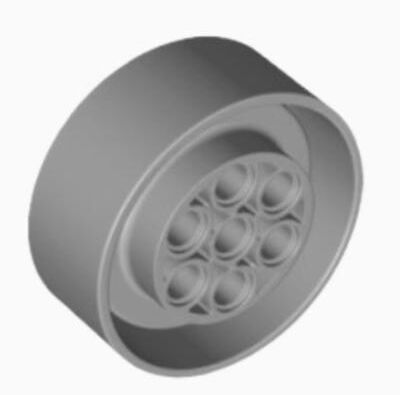
Lush Living Finds Perforated Brick Assembly Toy Accessories With Technology Mechanical Wheels Perforated Brick Assembly Toy Accessories With Technology Mechanical WheelsEnhance Creativity with Technology Mechanical Wheels Unlock the power of innovation with our technology mechanical wheels, designed specifically for perforated brick assembly toy accessories. Whether you are a hobbyist or a seasoned builder, these...43,97 $*Shipping: 0,00 $Secure redirect to the provider
-
Can you help me conjugate avoir?
Sure! The verb "avoir" is conjugated as follows: - J'ai (I have) - Tu as (You have) - Il/Elle/On a (He/She/One has) - Nous avons (We have) - Vous avez (You have) - Ils/Elles ont (They have) **
-
How do you conjugate in French?
In French, verbs are conjugated to match the subject of the sentence, including the person (I, you, he/she, we, they) and the tense (present, past, future, etc.). To conjugate a regular verb in the present tense, you remove the infinitive ending (-er, -ir, -re) and add the appropriate ending for the subject (je, tu, il/elle, nous, vous, ils/elles). For example, for the verb "parler" (to speak), you would conjugate it as "je parle" (I speak), "tu parles" (you speak), "il/elle parle" (he/she speaks), "nous parlons" (we speak), "vous parlez" (you speak), "ils/elles parlent" (they speak). Irregular verbs have their own unique conjugation patterns that need to be memorized. **
-
How do you conjugate "perire" in Latin?
The verb "perire" in Latin is conjugated as follows in the present tense: - I perish: pereo - You perish: peris - He/she/it perishes: perit - We perish: perimus - You (plural) perish: peritis - They perish: pereunt **
-
How do you conjugate the Passé Composé?
To conjugate the Passé Composé in French, you typically use the auxiliary verb "avoir" or "être" followed by the past participle of the main verb. The choice between "avoir" and "être" depends on the verb being used and whether it is a transitive or intransitive verb. The past participle of regular -er verbs is formed by replacing the -er ending with -é, for -ir verbs you replace the -ir ending with -i, and for -re verbs you replace the -re ending with -u. Irregular verbs have unique past participle forms that need to be memorized. **
* All prices are inclusive of VAT and, if applicable, plus shipping costs. The offer information is based on the details provided by the respective shop and is updated through automated processes. Real-time updates do not occur, so deviations can occur in individual cases. ** Note: Parts of this content were created by AI.